Long-term review
Bambu Lab P1S after 1,000 hours: the sensible all-rounder.
The P1S takes the quick, dependable P1P formula and gives it a proper enclosure. A thousand hours later, that remains a useful upgrade—not because it turns the printer into a miracle machine, but because it broadens the work it can do without spoiling what was already easy about it.
1,000hours reviewed
256 mmcubed build volume
$499price at review
The short verdict
The P1P, finished properly.
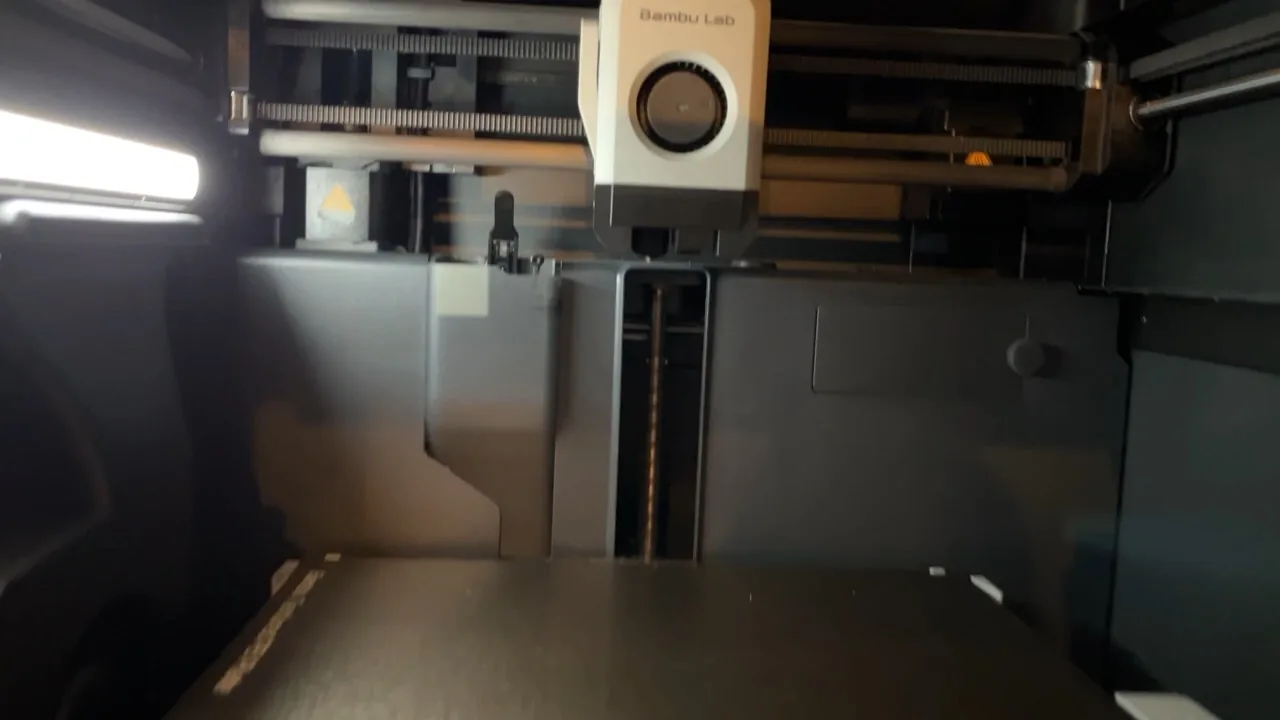
There is no mystery to the P1S: mechanically and electronically, it is largely the same printer as the P1P. That is a compliment. It carries over the quick setup, direct-drive extruder, 500 mm/s headline speed and the Bambu ecosystem that make ordinary PLA and PETG work feel almost uneventful. The difference is a well-finished enclosure, a chamber fan and an activated-carbon filter.
That extra hardware does not make it the best machine for every temperature-sensitive filament. A printer with an actively heated chamber is still the better answer for regular ABS, ASA or nylon work. But for a workshop that prints those materials occasionally, the P1S gives the P1 series enough shelter to do the job—and does it without asking its owner to build a DIY box around a new printer.
Anyone who wants Bambu Lab’s easy, reliable everyday workflow but needs the option to print ABS or ASA now and then in a neat, ready-made enclosure.
The meaningful upgrade
Not a heated chamber—but a useful one.
The back and side panels are metal; the top and front are glass. Together they make the P1S feel more finished than the open-frame P1P and, more importantly, contain enough warmth for occasional ABS and ASA prints. The added chamber fan and activated-carbon filter are sensible details too. Not every enclosed printer gives either one as standard.
Keep the boundary clear. The P1S enclosure holds onto heat; it does not actively create a stable, high-temperature chamber. That matters on big, demanding engineering parts. If those materials are the main workload, a heated-chamber printer such as the QIDI Q1 Pro is the less compromised tool. For the occasional functional ABS or ASA part, the P1S is more than capable.
A thousand-hour routine
The strengths are the boring ones—and that is the point.
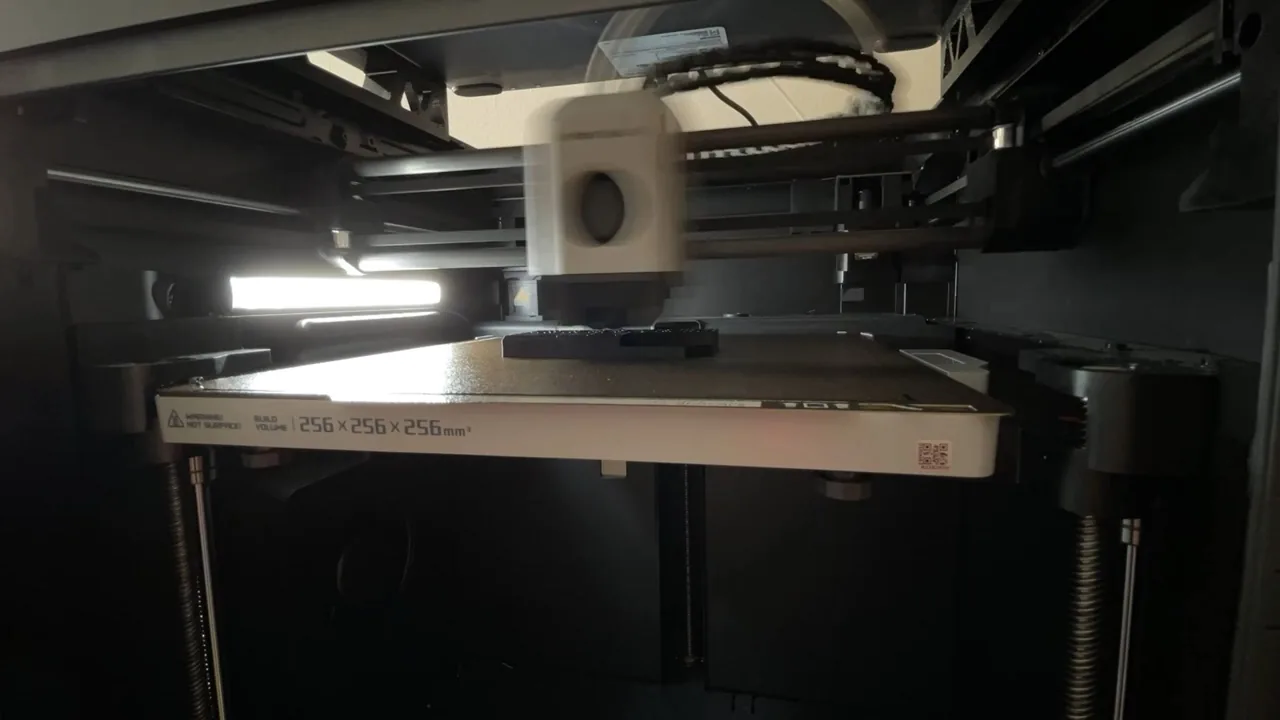
The P1S is at its best when there is no story to tell. Default filament profiles normally produce clean parts; about 95 percent of first layers land without drama; and Bambu Studio makes preparing, sending and managing a job unusually straightforward. It is the sort of printer that lets an owner hit print and return when the part is finished rather than when the machine requires another decision.
The optional AMS makes that routine stronger still. It can keep the common materials ready, swap to a matching spool at runout, and add colour or dedicated support material when the job really needs it. It is not essential to the P1S, but it helps explain why this ecosystem remains such an easy recommendation for a general-purpose printer.
What the enclosure does not fix
Quieter-looking, not quieter-running.
The chamber fan is loud
An enclosed printer ought to sound more contained, but the additional chamber fan is conspicuous. With PLA it can be switched off and the door opened, though that leaves the P1S at roughly the same subjective noise level as the P1P.
The old control hardware remains
The processor is slow, the screen feels dated and the camera is still poor. None stops the printer doing its job, but they are noticeable concessions next to newer machines in this price range.
Watching a print is harder
The dark front glass and closed side panels limit the view into the chamber. The choice is to open the door or rely on that underwhelming camera—less satisfying than an open P1P with a clear side panel.
Scorecard
A strong all-round score, with a clear use case.
Print quality
8/10Default filament profiles still deliver the near-flawless, predictable result that makes the P1 series easy to recommend.First layer
8/10Usually dependable enough to start a job without standing over the first layer; occasional misses do happen.User experience
8/10Bambu Studio and the wider ecosystem remain unusually intuitive, while the screen and processor now feel dated.Features
7/10The enclosure and activated-carbon filtration make a practical difference, but camera quality and noise hold it back.Value
7/10At the review price, the $100 premium over the P1P was a fair charge for a factory-made enclosure and filtration.Final word
A good default choice for people who do more than PLA.
The extra $100 over the P1P was justified at the review price. Building an enclosure for less is possible, but it will not look as tidy and it will not bring the filter along with it. More important, the P1S preserves the reasons the P1P became popular in the first place: speed, repeatable quality, a mature slicer and an ecosystem that removes friction from normal printing.
It is not the quietest printer and it is not a substitute for an actively heated chamber. It is, however, one of the most universal choices at this price: a quick and reliable PLA/PETG machine that can take on tougher filaments when a project calls for them. Most buyers will find very little to regret.
Read the Bambu Lab AMS review