Long-term review
Bambu Lab A1 mini after 1,000 hours: the entry-level printer to beat.
Small, inexpensive and slightly unassuming, the A1 mini has spent more than a year proving that a first printer need not feel like a project before it can print a project. A thousand hours in, it is still the easiest recommendation for the right kind of beginner.
1,000hours reviewed
180 mmcubed build volume
$199price at review
The short verdict
Buy it to print, not to learn how printers work.
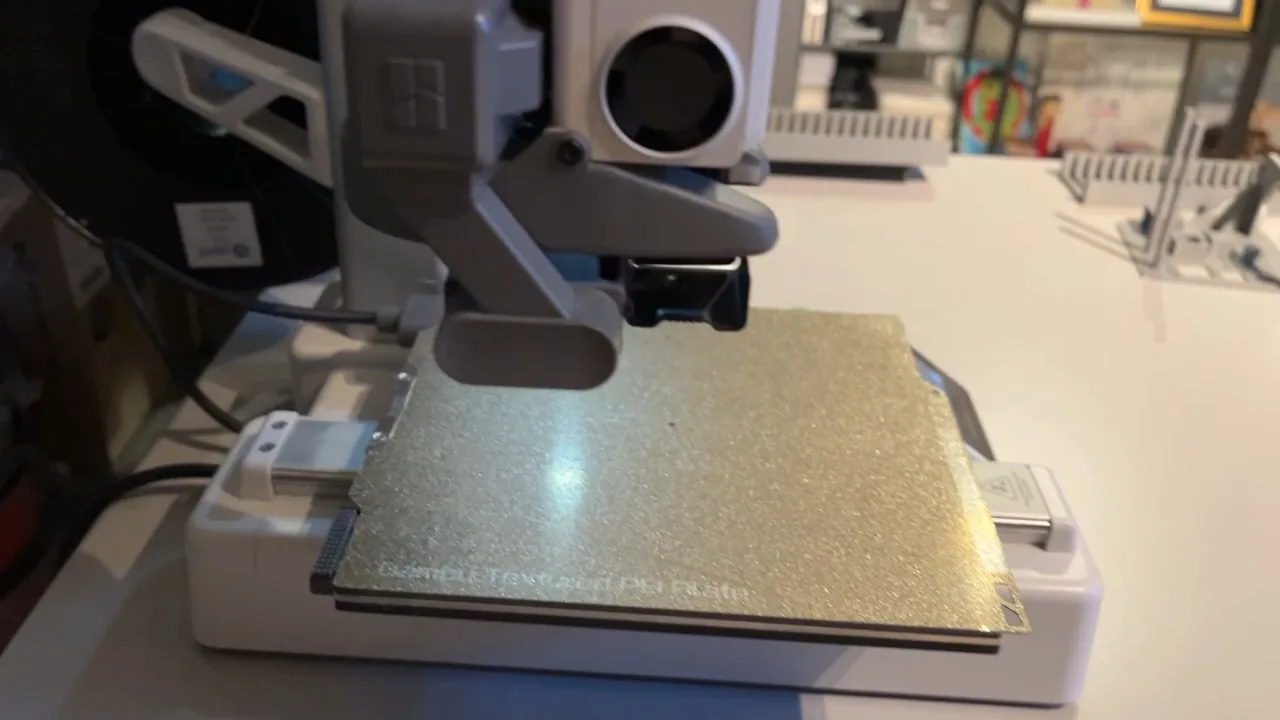
The Bambu Lab A1 mini is not a universal machine. It has an open frame, a 180 × 180 × 180 mm build volume and a moving bed. It is not intended for ABS, ASA or nylon, and a tall part will not look as composed as it would from a well-tuned CoreXY printer. Those are real limits, not footnotes.
Within its lane, though, it is remarkably good. PLA and PETG print cleanly; it is compact enough to disappear onto a desk; and the combination of automatic levelling, flow calibration, Bambu Studio and a sensible touchscreen removes most of the awkwardness that used to define an entry-level 3D printer. After 1,000 hours, it remains the most enjoyable place to start.
First-time owners, compact workspaces and experienced makers who want a quiet, capable PLA/PETG/TPU machine beside a larger technical-materials printer.
The real advantage
It removes the little frictions that make beginners quit.
The standout feature is the quick-swap nozzle. Changing a nozzle takes less than a minute, needs no tools and is such a contrast to the more fiddly P1-series routine that this became the only printer in the workshop where moving between 0.4 and 0.2 mm nozzles feels casual. That encourages better choices: a fine nozzle for detail, a normal one for ordinary parts, instead of one nozzle trying to serve every job.
Automatic bed levelling and flow calibration carry the same idea. There is no manual Z-offset ritual before a print. Bambu Studio, the mobile app, cloud support and the MakerWorld library are connected well enough that the process genuinely approaches plug-and-play. The app can even restart prior prints from a phone. For a new owner, that coherence is more valuable than another line on a specification sheet.
Print quality and living space
It performs above its price, then asks sensible compromises.
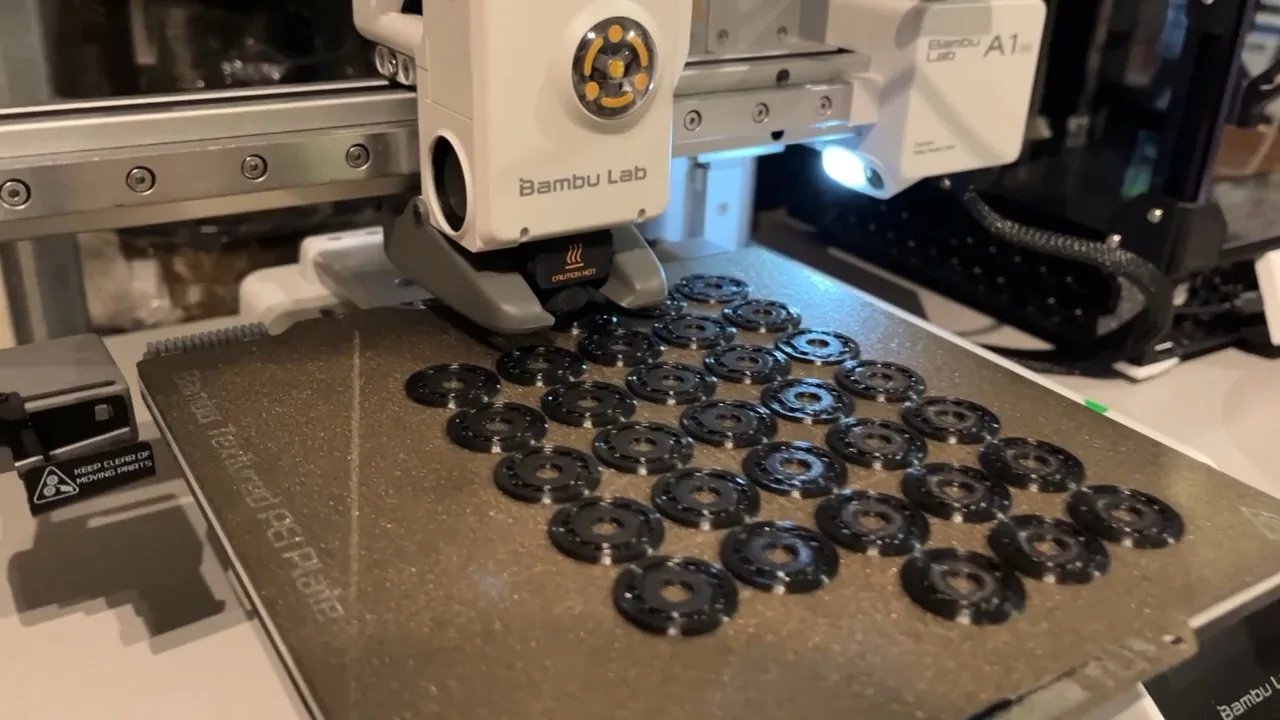
Input shaping gives sharp corners and tidy walls at speeds that would once have been ridiculous for a $199 printer. For everyday PLA and PETG parts, its output is surprisingly close to the P1P and P1S. The small footprint is another genuine advantage, not merely a smaller number on a product page. It takes very little room and is quieter than the P1P; with PETG, it fades into the background almost completely.
The optional AMS Lite makes a strong value argument too. It is one of the least expensive ways into multicolour printing, although it is happiest with Bambu Lab spools. Many third-party spools need an adapter before they will sit correctly, which is a small but useful reminder that the system is not quite as universal as it looks.
The trade-offs
The build volume is not the only thing that is smaller.
Large first layers need a look
The levelling system is accurate, but larger prints can show uneven adhesion or flow across the plate. Small parts are rarely affected; for a big footprint, it is wise to watch the first layer rather than leave immediately.
Tall models reveal the moving bed
This is a bed-slinger, not a CoreXY. Tall prints can develop a little Z wobble or ghosting. Lowering speed and acceleration helps, but it does not change the machine’s geometry.
Material range is deliberately narrow
The open frame is for PLA, PETG and TPU. A moving air current can affect a large print, and the machine is not designed for ABS, ASA or nylon. Buyers who need those materials should look to an enclosed printer instead.
Scorecard
Excellent value, with its boundaries honestly drawn.
Print quality
7.5/10Sharp, clean everyday PLA and PETG parts for the price, with taller models showing the expected limits of a moving-bed design.First layer
7/10Automatic levelling is excellent, but large prints can still show inconsistent flow or adhesion across the plate.User experience
9/10Fast tool-free nozzle changes, automatic calibration and Bambu’s connected ecosystem make this the closest thing to plug-and-play in the workshop.Features
7/10Input shaping, flow calibration, camera, light, Wi-Fi and AMS Lite support are generous; the open frame limits material range.Value
9/10At $199 during this review, it delivers an unusually complete hardware and software experience for the money.Final word
A first printer that does not feel like a practice printer.
At $199, the A1 mini offers a great deal more than inexpensive hardware. It offers a usable path from an idea to a finished part, without making calibration and maintenance the hobby. The quality, compact size, low noise and remarkably easy nozzle changes make it a natural first printer and an unusually sensible second one.
Choose a different machine if large, tall or high-temperature parts are the goal. For almost everything else a beginner is likely to print in the first year, this is quick, capable, quietly pleasant and very hard to fault for the price.
Read the Bambu Lab P1S long-term review