
Workshop build
Building a Voron 0.2 in 2026: does it still make sense?
A Voron 0.2 is not an answer to the question, “What is the quickest way to get a good print?” It is an answer to a more interesting one: “What if I want to understand, tailor and keep improving the machine that makes it?” That distinction decides whether this little printer is a brilliant project or an unnecessarily long route to a first layer.
0.2compact Voron platform
4stages: parts, frame, wiring, tuning
1good reason to build: you want the project
The short answer
Yes—provided the build is the point.
The uncomfortable comparison is easy to make. A current ready-made printer will arrive assembled, calibrated and able to produce a useful part before a Voron builder has finished sorting fasteners. If the goal is simply dependable PLA, PETG or TPU printing, that convenience is difficult to argue with.
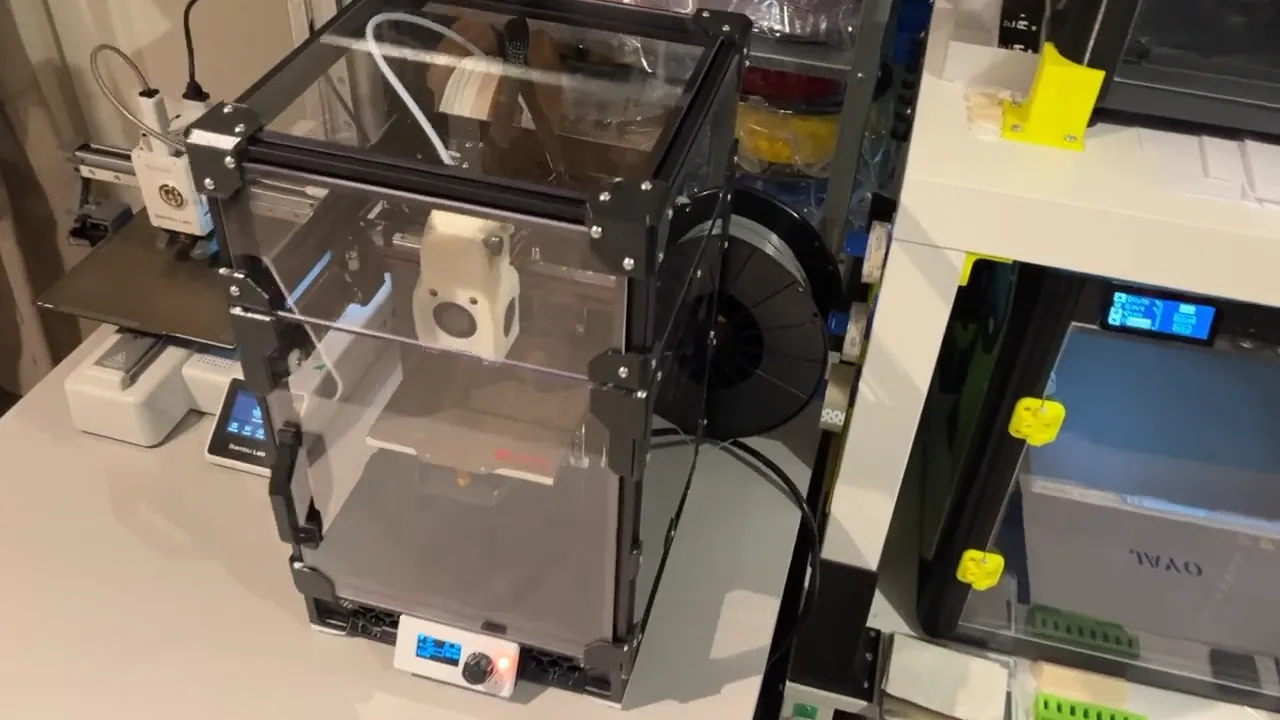
But the V0.2 is not trying to win that race. It is a small, enclosed CoreXY design built around a public specification and a community of builders. You choose the printed parts, rails, electronics, toolhead details and finishing touches; in return, you know where every wire goes and why every component is there. For someone who enjoys that ownership, it still makes a lot of sense.
You want a compact, enclosed printer as a project in its own right, are happy to work through a bill of materials and configuration, and would rather repair or refine a machine than replace it.
Before the first screw
The kit is only the beginning of the shopping list.
The parts stage makes the difference between a Voron and a conventional purchase immediately visible. The build has a proper bill of materials: extrusion, linear rails, motors, belts, pulleys, fasteners, printed structural parts, a heated bed, power components, controller, display and more. A kit can make that manageable, but it does not remove the need to check what is included and what quality level it represents.
The printed pieces deserve particular attention. They are not cosmetic accessories; they locate rails, carry moving parts and survive the warm enclosure. Use accurately printed, heat-tolerant parts from a known source or make them on a suitable machine. Saving money on the pieces that establish the geometry is a false economy.
The mechanical build
Small dimensions do not make this a small job.
The frame goes together quickly enough, then the precision work begins. Rails need to sit square, belts need even tension and the compact motion system needs to move freely before it is hidden behind panels. None of this is mysterious, but each step is easier when it is approached methodically rather than forced into place at the end.
That is also where the V0.2 earns its character. The machine is elegantly packaged: a fully enclosed printer with a neatly contained motion system and an unusually small footprint. The trade-off is the same density that makes it appealing. There is far less empty space to hide a poor decision or a careless cable route.
Where the build becomes personal
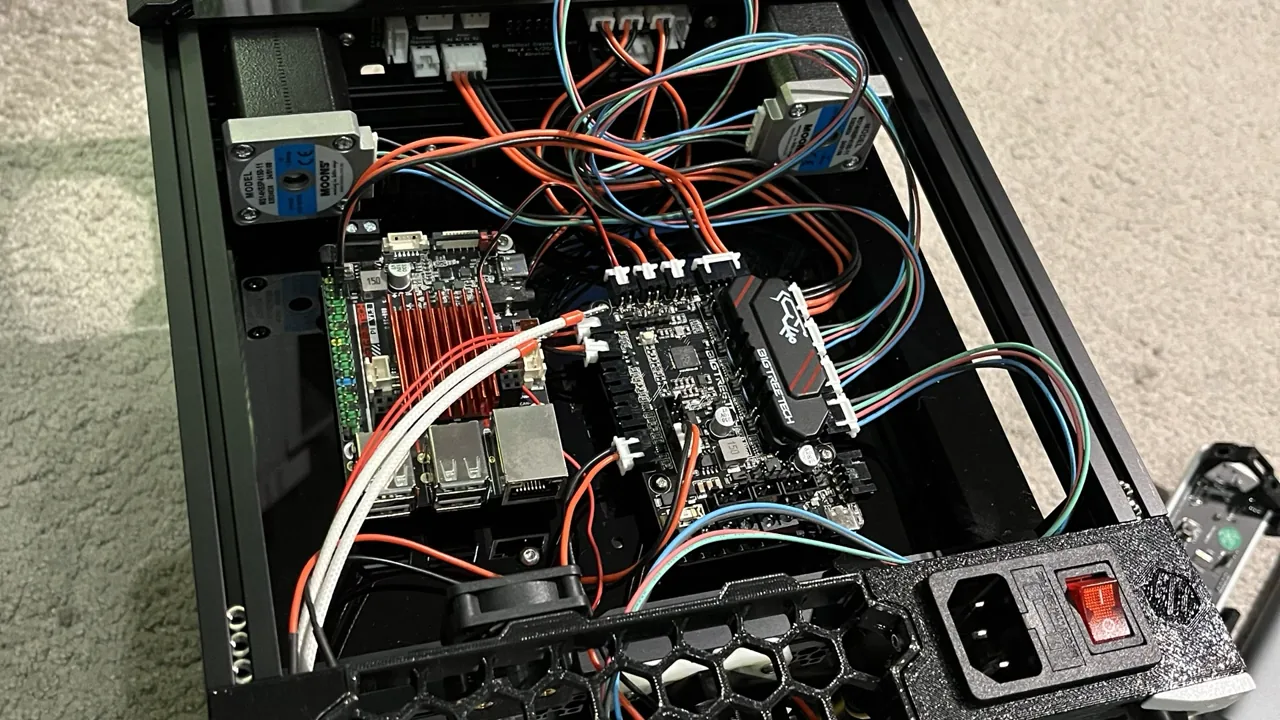
Wiring is not the glamorous part. It is the real commitment.
Plan before closing the base
The controller, power hardware, motors and heater all meet in a very small area. Leave sensible service loops, use strain relief and check each connection while access is still easy. A neat base is safer, easier to diagnose and much less frustrating to revisit.
Configuration is part of assembly
Firmware, sensors, heaters and motion settings need to describe the hardware actually installed—not a generic printer profile. The reward is control; the cost is that the builder owns the setup and has to validate it carefully.
Do not rush the safety checks
Test heaters, fans, endstops and motor direction in a calm, deliberate order before asking the printer to run a full job. A DIY machine deserves a proper first-power-on routine, not a hopeful click of the print button.
First prints and final verdict
A capable little printer, but never a casual purchase.
Once configured, the V0.2 proves why the design has lasted. Its enclosed format and compact CoreXY layout make it an appealing small-machine companion for parts that benefit from a controlled environment. The first successful prints carry a different satisfaction too: they are not just outputs from an appliance, but confirmation that the system you assembled is working as a system.
The sensible modern verdict is not that everyone should build one. Plenty of people should buy a ready-made printer and spend their weekends making things with it. Build the Voron if the journey—sourcing, assembling, configuring and eventually improving it—sounds as rewarding as the print at the end. In that role, even in 2026, the V0.2 remains a very compelling machine.
Read the Bambu Lab A1 mini review