
Long-term review
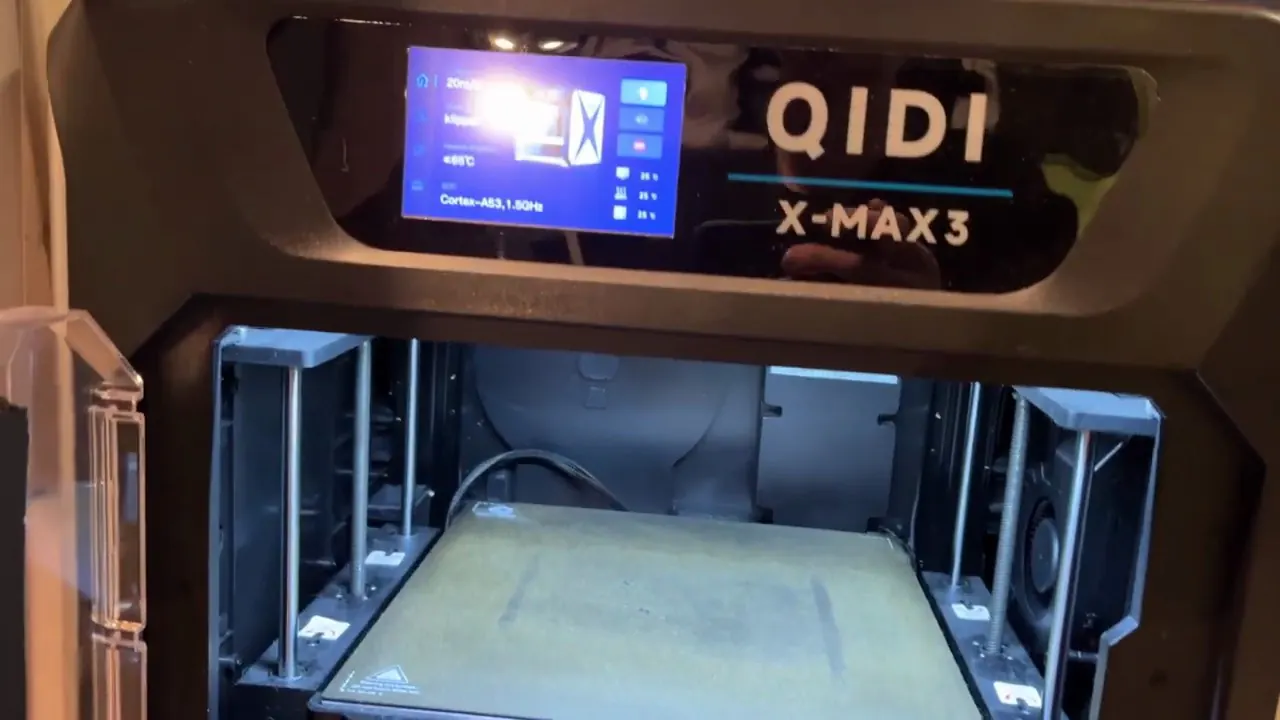
QIDI X-Max 3 after 2,500 hours: a large-format workhorse.
The X-Max 3 has the rough edges of a machine designed by engineers rather than product managers. It has also asked for almost nothing beyond a nozzle change through 2,500 hours of serious work.
2,500hours in service
325 mmcubed build volume
$749price at review
The short verdict
Buy it when the job is big, hot or both.
The QIDI X-Max 3 is not the printer to recommend blindly to someone who wants pretty PLA ornaments. In that role, smaller printers can be cheaper, tidier and more polished. It is for the project that will not fit a 250 mm cube, or for ABS, ASA, nylon and fibre-filled materials that become needlessly difficult in a cold, open machine.
Through 2,500 hours, the central claim has held: it is built to work. Nothing has broken; maintenance has amounted to changing nozzles. That reliability matters more than a glamorous launch specification, and it offsets a user experience that often feels a generation behind the best consumer printers.
Workshops making large functional parts in ABS, ASA, nylon, glass-filled or carbon-fibre materials—and prepared to give the initial calibration proper attention.
Where it earns its keep
A large build volume, plus the climate to use it well.
The 325 × 325 × 315 mm build volume is the headline and, in practice, the reason to own the machine. It lets a workshop make the large enclosure, bracket or batch of parts in one piece rather than turning a print into an assembly job. The direct-drive system, dual Z arrangement and stiff motion hardware make that scale feel deliberate rather than optimistic.
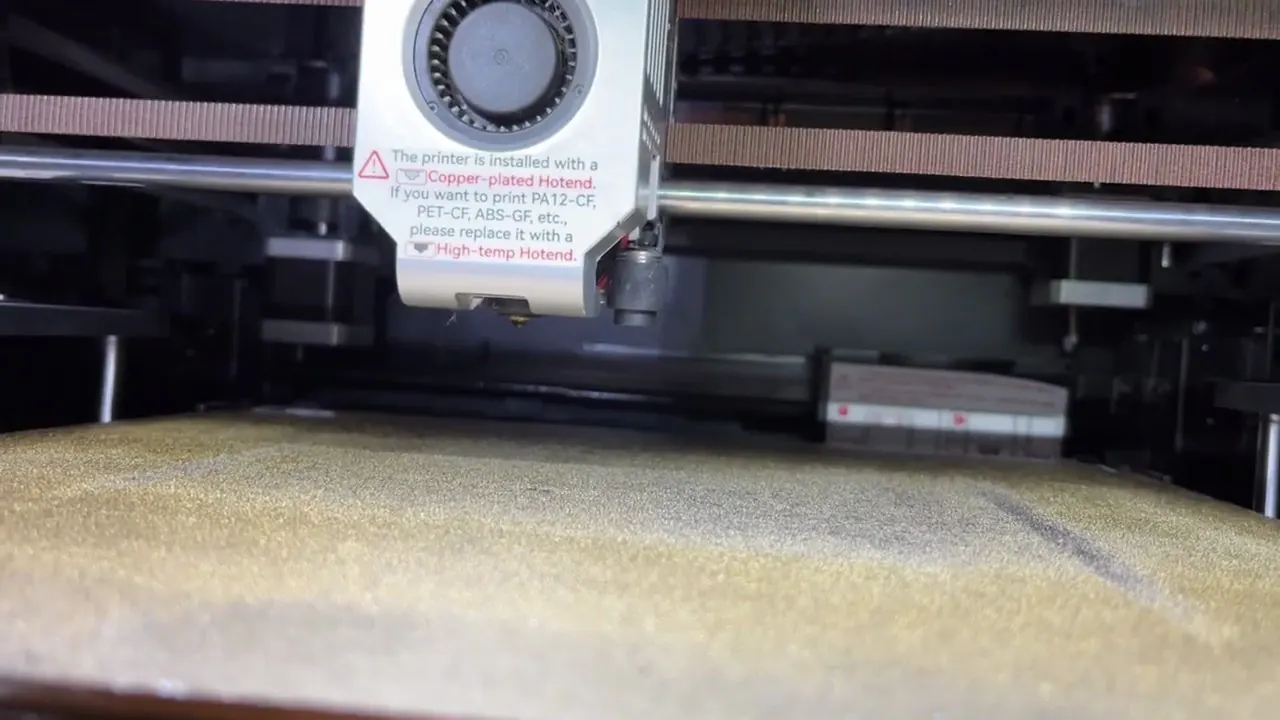
More important than the quoted top speed is the actively heated chamber. With heat around the part, ABS and ASA become far less temperamental: warping is no longer the expected ending to a large print. A hardened nozzle opens the door to glass- and carbon-fibre filaments too. This is the same materials-first appeal that makes the smaller QIDI Q1 Pro interesting, at a substantially bigger scale.
The routine
It needs a careful start. It does not demand one every week.
The X-Max 3 uses a semi-automatic levelling process. Initial Z offset is set with paper and it can take an hour or two to make the first layer completely dependable. That is old-fashioned next to a fully automatic system, but once set it has stayed set. The only recurring judgment is material-specific: a first layer that suits one filament may want a small offset change for another.
Heat soak also belongs in the routine. When printing with a bed around 70°C or higher, allowing five to fifteen minutes for the machine to settle improves Z consistency. It is not an elegant ritual, but it is a predictable one—and vastly preferable to discovering a large technical print has failed on its first layer.
After 2,500 hours, nozzle changes are the only maintenance reported. That is an unusually clean record for a printer of this size and workload.
What still feels unfinished
The tough part is better than the easy part.
Early machines were a gamble
Early production had well-known teething problems. This review machine was bought in 2024, after fixes had arrived; buyers of a used example should verify that it is from that later production period.
A camera should be standard
The mainboard is prepared for a camera, but it remains an optional extra. That is a strange omission on a large printer whose jobs can run for days, even though the five-inch screen is otherwise clear and responsive.
It takes room to live with
The rear spool holder is awkward on a printer that is already over 30 kg and nearly 60 cm tall. Its enclosed holder can take desiccant, which is useful, but plan access before you put the machine against a wall.
Scorecard
Excellent hardware, a less complete appliance.
Print quality
7.5/10Capable, consistent output; decorative PLA is a shade cleaner on the P1P.First layer
6/10Reliable once calibrated, but it asks more of the owner at the beginning.User experience
6/10Useful Klipper access, undermined by a few unpolished daily details.Features
5/10A heated chamber is valuable; camera and automatic levelling should not be extras.Value
8/10Strong value for a large, durable, materials-capable machine at the review price.Final word
A workshop machine that has earned trust the slow way.
At $749 during this review (with a regular price then of $999), the X-Max 3 offered a compelling amount of capable hardware for the money. Its 600 mm/s headline speed and 20,000 mm/s² acceleration are useful, but not the point. The point is being able to load a large, demanding job and expect a solid printer to see it through.
There are easier printers to own, and better choices if PLA is all that ever reaches the shelf. For large engineering work, though, this is a serious, durable machine whose awkward details become easier to forgive every time it finishes a part no smaller printer could have made.
Read the QIDI Q1 Pro long-term review