
Workshop review
QIDI Plus4 after 200 hours: my favourite 3D printer so far.
QIDI’s Plus4 takes the capable heated-chamber idea from the X-Max 3, then fixes most of the little things that made that older printer feel unfinished. After 200 hours, it is the printer this workshop reaches for first.
200hours reviewed
305 mmcubed build volume
$799price at review
The short verdict
Big, quiet, properly equipped—and unusually well sorted.
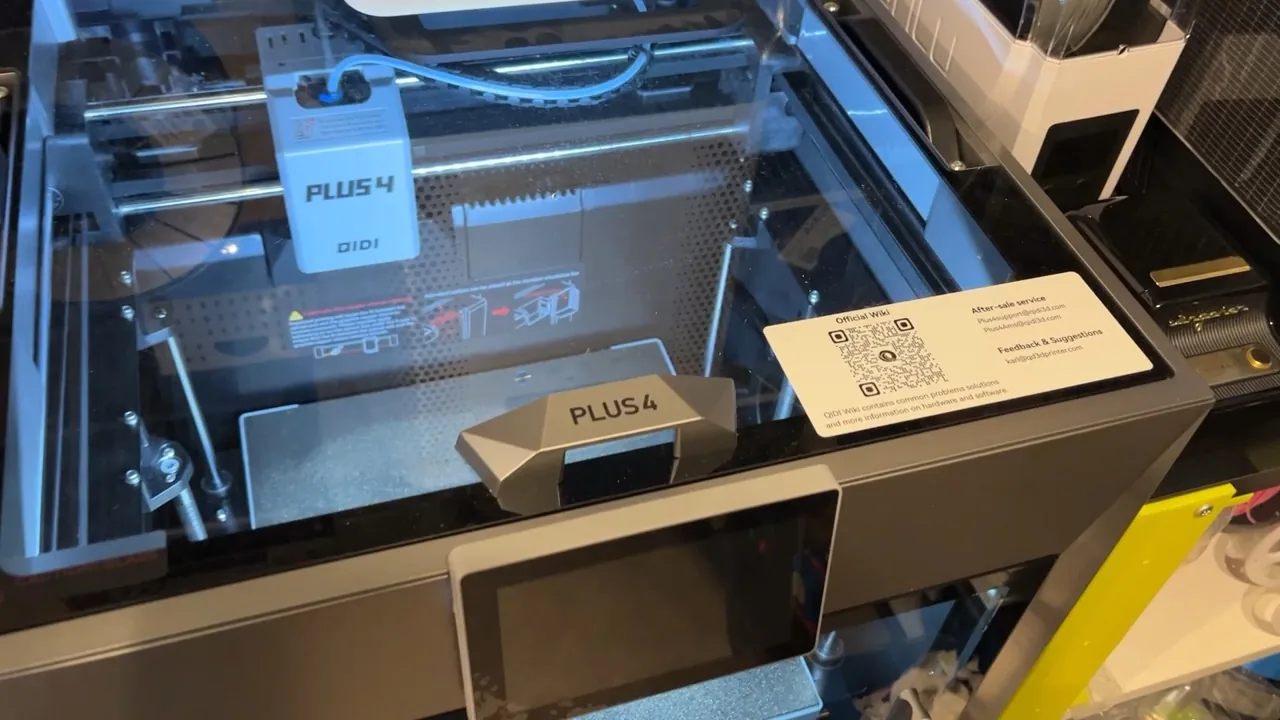
The QIDI Plus4 has an imposing specification: a 370°C nozzle, 120°C bed, 65°C heated chamber, direct-drive extruder and a 305 × 305 × 280 mm build volume. Specifications alone do not make a good printer. Here, though, the first 200 hours support the promise. It prints cleanly across the materials used in the review, the first layer has been faultless without manual adjustment, and it is substantially quieter than a Q1 Pro or a Bambu Lab P1S.
Most importantly, it feels like QIDI listened. The screen, bed levelling, sound treatment, nozzle-cleaning routine, spool-holder position and the use of the printer’s external space are all better resolved than on the earlier X-Max 3. It is not perfect, but it is a rare case of a feature-rich machine whose details are already pulling in the same direction.
Makers who want one enclosed printer for polished PLA and PETG parts today, plus ABS, ASA, nylon and higher-temperature engineering materials when the work demands them.
The hardware case
A technical-materials printer that is not only for technical materials.
The Plus4’s internal frame, 10 mm belts and 6 mm bed suggest a machine designed for the workload rather than a small printer enlarged by wishful thinking. The 80 W heater and unusually long nozzle give filament more time to warm through. That matters at speed: PLA parts in this review came out glossy, instead of showing the dull surface that can expose an under-heated melt.
Its temperature range goes beyond ordinary ABS, ASA and nylon. A 370°C nozzle, 120°C bed and 65°C heated chamber bring PPS within reach and brush the lower end of PEEK requirements. Those are not reasons to buy expensive filament on a whim; they are a sign that the machine will not become the limiting factor when a workshop’s material needs grow.
The useful improvements
The small decisions make a bigger difference than the spec sheet.
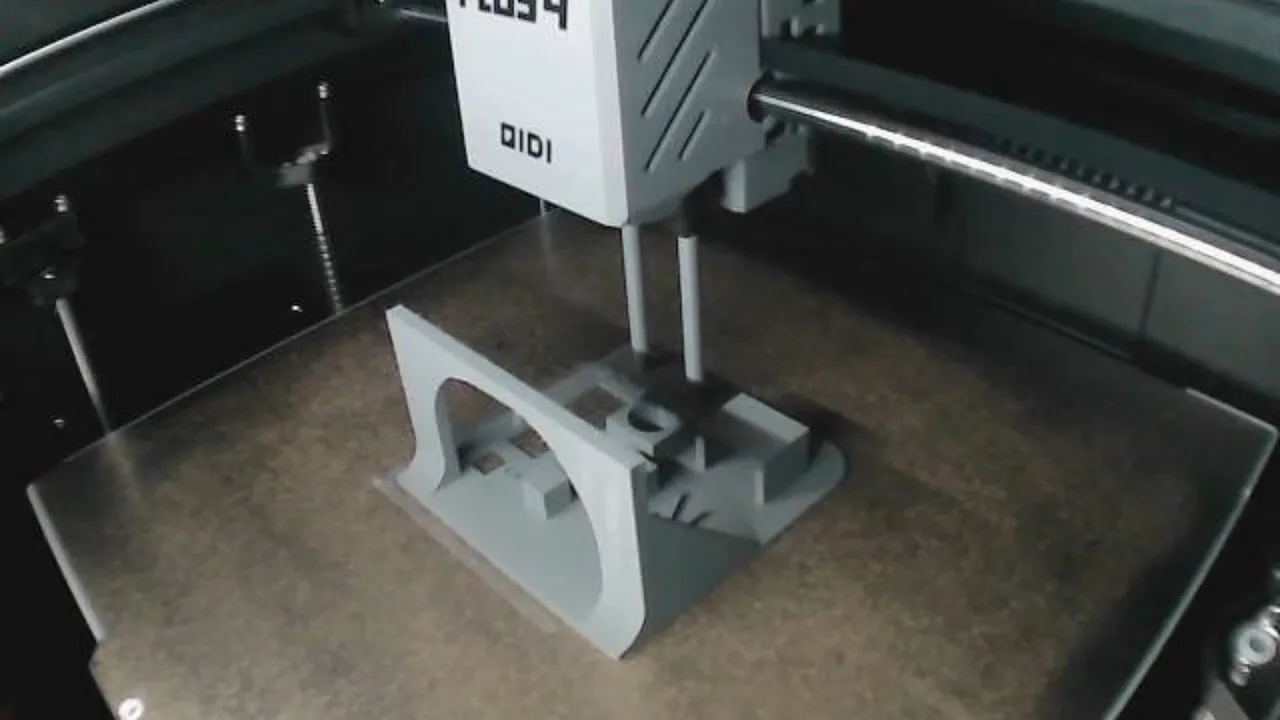
The whole-sensor levelling system is not the preferred design on paper, but the result is difficult to argue with. There has been no manual calibration or Z-offset compensation since setup. The touchscreen is clearer and more useful than QIDI’s previous generation, and the sound-deadening material and seals around the doors make the enclosed machine pleasantly restrained in use.
The practical details are unusually good. The spool sits above the printer rather than hidden at the back; the footprint makes better use of the available volume; and the nozzle is cleaned against a small PEI section and cleaning pad with a considered start-up routine. Wi-Fi, LAN and USB give owners a choice of connection, while both QIDI Slicer and OrcaSlicer profiles provide a sensible route into the workflow.
What to check before buying
Very little is missing, but the exceptions are worth knowing.
Avoid the early US batch
The early production run had a widely reported SSR issue and a recall affected units in the United States. This review unit was bought after the fixes. New stock is reported fixed, but a used or old-stock US printer deserves a serial-number check.
Multi-material remains the missing feature
The hardware is prepared for QIDI’s promised multi-material system, but it was not available at the time of the review. Anyone whose main requirement is multicolour printing should wait for it rather than buy on the assumption that it is here.
The mobile experience is still utilitarian
Remote printing worked reliably, but the phone app is close to a raw Klipper page. The screen also slows down when it has to load a long list of old print thumbnails. Both are minor, but neither feels as polished as the hardware.
Scorecard
The most complete QIDI yet.
Print quality
8.5/10Almost flawless results across materials, with a long nozzle that keeps high-speed PLA looking properly melted and glossy.First layer
8/10The inductive-sensor system has needed no manual calibration or Z-offset correction in the first 200 hours.User experience
7/10A much better screen and reliable remote control, held back by a raw Klipper-style phone interface and some buried slicer settings.Features
8.5/10Heated chamber, filtration, camera, high-temperature hardware, LAN, Wi-Fi and USB leave very little absent except multi-material printing.Value
8/10At the review price, the large build volume and serious materials capability make the Plus4 feel fairly priced rather than merely well specified.Final word
For now, the first printer to choose.
At $799 during the review, the Plus4 offers an unusually complete package: serious temperatures, a proper heated chamber, a useful build volume, a good camera, filtration, filament monitoring and hardware that feels built for long-term use. More impressive than the list is how few of those features feel like afterthoughts.
The review is still young at 200 hours, so a longer-term verdict may reveal issues that are invisible today. On the evidence so far, though, this is QIDI’s best printer yet and one of the strongest all-round options available to a workshop that does not need multicolour printing immediately.
Read the QIDI X-Max 3 long-term review